How to Build an MMA Cage: Dimensions, Materials, Costs and Construction Guide
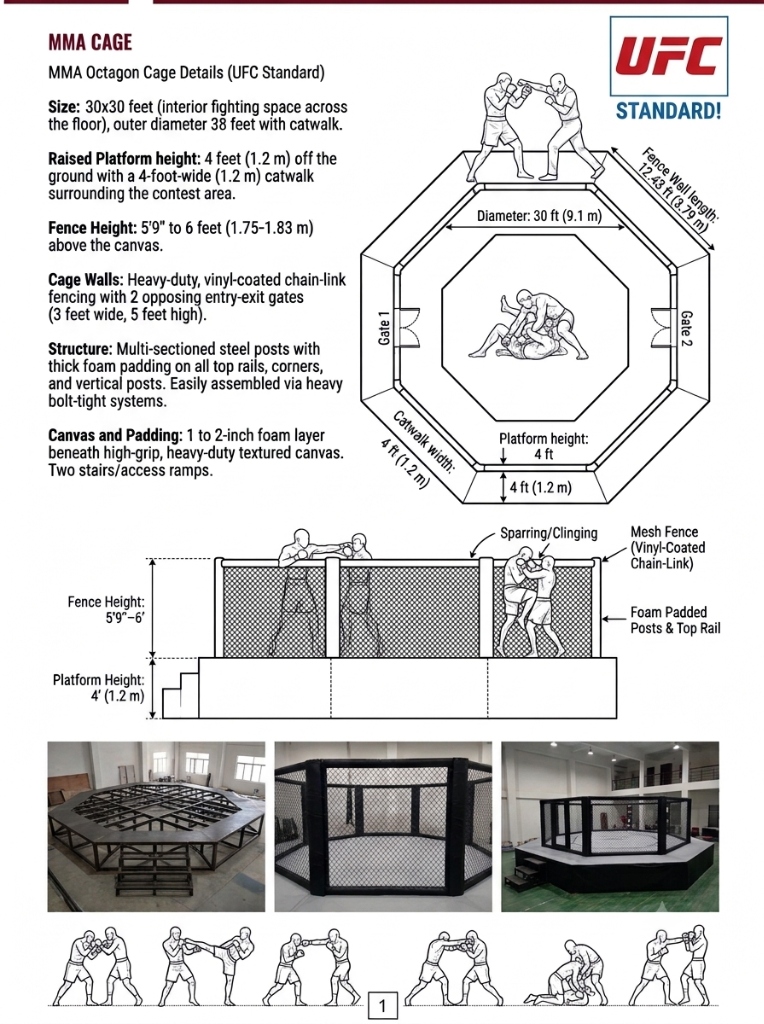
Standard Cage Dimensions: Octagons vs Hexagons
When designing a Mixed Martial Arts (MMA) enclosure, the overall geometry dictates fighter footwork, ringmanship, and camera sightlines. The two most common geometric footprints are the 8-sided Octagon and the 6-sided Hexagon.
- ▪ Official Championship Octagon (30 ft / 9.1m): The gold standard popularized by premier global promotions like the UFC. Measured from opposite fence line to fence line, it provides approximately 750 square feet of fighting area. This vast footprint allows ample lateral footwork, takedown defense, and recovery distance for heavyweights and agile strikers.
- ▪ Pro Club & Gym Octagon (20 ft to 24 ft / 6.1m to 7.3m): The most popular commercial configuration across top Indian combat facilities. At 20ft to 24ft, athletes experience authentic wall-walking and cage-pinning dynamics without consuming the entire gym floor plan.
- ▪ Compact Training Hexagon (12 ft to 16 ft / 3.6m to 4.8m): Hexagonal cages feature 6 sides rather than 8, which simplifies frame joints while reducing steel fabrication costs. They are ideal for grappling wall-drill stations, striking clinch work, and boutique academies where ceiling clearance or floor space is constrained.
Platform Elevation and Fence Heights
Enclosures vary significantly depending on whether they are installed for daily club sparring or televised stadium championships:
- ▪ Floor-Level Cages (0 cm platform): Anchored directly into the concrete slab via chemical wedge anchors or resting on an integrated perimeter frame. Eliminates fall hazards from heights, requires no stairs or scaffolding, and minimizes insurance liability for general membership training.
- ▪ Semi-Elevated / Low Platforms (30 cm to 60 cm / 1 ft to 2 ft): Provides clear visual sightlines for coaches and judges seated at ring-side while maintaining ease of access with a single step.
- ▪ Championship Elevated Platforms (90 cm to 120 cm / 3 ft to 4 ft): Mandatory for broadcast events and arena spectator seating (such as IPBL and national fight nights). Elevates the fighters above ringside camera crews, judges, and medical personnel. Requires heavy structural cross-bracing and modular access stairs.
Fence Height: Regulation fence panels measure between 5 ft 6 in and 6 ft (1.7m to 1.83m) above the mat surface. This prevents combatants from toppling over the top rail during high clinch battles while allowing unobstructed overhead arena lighting.
Essential Materials and Engineering Specifications
An MMA cage must endure instantaneous dynamic shock loads exceeding 1,200 kg when two 90 kg fighters collide against the fence at full speed. Inferior hardware results in fence blowout or structural failure.
- 1 Structural Steel Framing: Corner posts must be fabricated from heavy-gauge structural steel pipe (minimum 100mm / 4-inch nominal outer diameter with 3.5mm to 4.5mm wall thickness). Horizontal perimeter rails require 50mm × 50mm square hollow section (SHS) or 48mm round steel pipe.
- 2 Vinyl-Coated Chain-Link Mesh: Regular galvanized chain link from hardware stores will slice fighters' fingers, toes, and faces. Commercial cages use heavy 9-gauge or 10-gauge core wire encapsulated in a thick, smooth PVC/vinyl coating (total thickness 3.8mm to 4.2mm). The mesh is typically 50mm (2-inch) diamond weave, tightly tensioned to flex without sagging.
- 3 Sub-Floor Platform Decks: Elevated models utilize 25mm thick marine-grade cross-laminated plywood or heavy tongue-and-groove pine timber. Sub-frames must feature under-deck vibration dampeners to eliminate hollow drumming noises.
- 4 Under-Mat Impact Foam: Beneath the canvas lies 30mm to 40mm of cross-linked high-density EVA or bonded polyurethane foam (minimum 180–220 kg/m³ density). This absorbs impact from suplexes and double-leg slams while remaining firm enough for rapid pivot footwork.
- 5 Heavy-Duty Non-Slip Canvas: The top surface is tailored from 18oz to 22oz heavy-duty cotton duck canvas or non-tear textured PVC vinyl. Canvas provides superior grip when sweat accumulates, whereas smooth PVC is faster to wipe down between sessions.
Corner Padding, Rail Bumpers, and Entry Doors
Safety is dictated by padding quality and latch engineering:
- ▪ Corner Post Pads: All 8 vertical posts inside the fighting perimeter must be encapsulated with full-length 2-inch to 3-inch (50mm–75mm) high-density shock foam, clad in heavy 650 GSM commercial vinyl.
- ▪ Top & Bottom Rail Bumpers: Continuous horizontal tubular foam padding encases every perimeter steel rail. Fighters routinely bounce off the top rail; unpadded metal rails cause severe spinal and head contusions.
- ▪ Safety Door Systems: Regulation cages feature either one or two access doors. Doors must open outwards or swing both ways on heavy-duty industrial barrel hinges. The locking latch must feature a zero-pinch recessed mechanism with secondary safety pins, wrapped in protective foam flaps so fighters cannot catch limbs or toes during grappling exchanges.
Step-by-Step Construction Overview
Constructing a modular commercial MMA cage involves a strict sequence of mechanical assembly:
- 1 Site Layout & Foundation Squaring: Mark the center point and chalk the octagon vertices using geometric trigonometric triangulation (equal radius to all 8 corner posts). Ensure at least 4 to 6 feet of clearance around the perimeter for walkarounds.
- 2 Post Anchorage & Sub-Frame Assembly: Bolt down modular base ring spreader bars connecting the 8 corner posts. For elevated platforms, assemble the central support pillars, perimeter ring beams, and interlocking cross-girders.
- 3 Deck Laying: Screw down the marine plywood sheets with recessed countersunk fasteners. Verify zero lip overhang between adjacent boards.
- 4 Foam Layering: Lay out interlocking high-density EVA shock tiles. Tape all seams with heavy vinyl flooring tape to prevent tile drift under athletic torque.
- 5 Canvas Tensioning: Lay the canvas centrally, allow it to settle, and secure it around the perimeter rim using heavy bungee cord lace or under-deck ratcheted eyelets. The mat must be drum-tight with zero wrinkles.
- 6 Fence Panel Installation: Bolt the modular steel mesh panels to the corner posts using high-tensile Grade 8.8 bolts with nylon locknuts. Ensure tension wires keep the mesh uniformly taut across each section.
- 7 Bumper & Corner Pad Clamping: Wrap the top, bottom, and vertical posts with industrial velcro-sealed high-density vinyl foam protectors.
- 8 Stairs & Skirting: Attach non-slip steel access stairs with double handrails and hang the exterior perimeter skirt.
Required Tools and Structural Equipment
To execute this build, standard professional mechanical tools are required:
- ▪ Tools: Heavy socket set and ratchet wrenches (17mm, 19mm, 24mm), digital spirit level, laser measuring tape, torque wrench, impact driver, high-strength tension puller (come-along winch), and heavy-duty staple/cable wire cutters.
- ▪ Hardware: M12 and M16 high-tensile Grade 8.8 zinc-plated bolts with double washers and nylon-insert locknuts; heavy-gauge turnbuckles or tension bars; high-tensile wire rope (6mm aircraft cable) for mesh tensioning; industrial canvas perimeter eyelets.
- ▪ Safety Gear: Steel-toed boots, protective gloves, and eye protection during frame erection.
Estimated Costs in India (Basic vs Competition)
In the Indian combat sports market, raw material prices fluctuate with steel commodity indices. Below is an approximate expenditure estimate for Indian gym owners and promoters:
| Cage Tier & Geometry | Size / Diameter | Platform Elevation | Typical Price Range (INR) | Best Suited For |
|---|---|---|---|---|
| Modular Wall / Floor Hexagon | 12 ft × 12 ft (3.6m) | Floor Level (0 cm) | ₹1.20 L – ₹1.45 L | Grappling gyms, personal training, wall drill corners |
| Club Floor Octagon | 16 ft to 20 ft (4.8m – 6.1m) | Floor Level (0 cm) | ₹1.75 L – ₹2.50 L | MMA Academies, commercial fight gyms |
| Semi-Elevated Club Octagon | 18 ft to 24 ft (5.5m – 7.3m) | Low (30 cm – 60 cm) | ₹2.80 L – ₹3.95 L | Regional tournaments, fight academies, media sparring |
| Pro Championship Octagon | 28 ft to 30 ft (8.5m – 9.1m) | High (90 cm – 120 cm) | ₹5.00 L – ₹5.50 L | Televised promotions, IPBL/national bouts, arena events |
*Note: Custom multi-sponsor canvas digital sublimation printing, custom powder-coat hues (red/gold/matte black), and dual-door referee entry access add nominal customization fees.*
Safety Standards and Inspection Checklist
Before allowing any athlete inside the enclosure, conduct a rigorous multi-point safety inspection:
- 1 Welding & Shear Strength: Check all post baseplates, corner brackets, and joint welds. No hairline cracks, incomplete penetration, or porous welds are permitted.
- 2 Pinch Points & Wire Burrs: Run gloved hands over the entire chain-link fence surface. Confirm that all wire cut ends face outwards away from fighters and are capped with protective PVC.
- 3 Impact Rigidity: Push vigorously against each panel center. The fence should deflect slightly (20mm–40mm) to absorb kinetic shock, but must never touch external structural beams.
- 4 Turnbuckle & Bolt Torque: Verify that all M12/M16 bolts are torqued to manufacturer specifications with nylon locknuts fully engaged.
- 5 Canvas Firmness: Walk the entire perimeter; confirm there are no soft hollow voids or canvas bunched areas that could catch an athlete's toes during a takedown scramble.
DIY Fabrication vs Professional Manufacturing
Gym owners often contemplate hiring a local neighborhood fabricator to weld an octagon from scratch. While tempting from a cost perspective, DIY combat enclosures carry grave structural risks:
- ▪ The Risk of Improper Fence Mesh: Local hardware stores stock thin galvanized mesh that easily unweaves or shears upon athlete impact, posing severe puncture and laceration hazards.
- ▪ Inadequate Structural Engineering: Certified arena manufacturers like Fighter Forge engineer interlocking laser-cut modular steel frames capable of quick assembly and disassembly in under 3 hours without on-site welding.
- ▪ Re-sale & Event Rental Value: Factory-built modular cages retain high commercial resale value and can be rented out for regional fight nights, generating substantial secondary revenue for gym owners.
Maintenance and Sanitization Protocols
MMA cages harbor sweat, saliva, and bodily moisture. A daily sanitization routine protects members against ringworm, staph, and mat herpes:
- ▪ Daily: Sweep canvas and mop using hospital-grade, non-bleach quaternary ammonium disinfectant solutions.
- ▪ Weekly: Wipe down vinyl fence rails, corner bumper pads, and door handles with disinfectant wipes. Inspect mesh tension wires.
- ▪ Monthly: Torque-check all frame bolts, examine sub-mat foam for compression divots, and inspect door barrel hinges for smooth, silent operation. Lubricate hinges with non-toxic white lithium grease.
FREQUENTLY ASKED QUESTIONS
How big is an official MMA cage?
The official UFC competition octagon measures 30 feet (9.1 meters) in diameter from fence line to fence line, standing 6 feet high with a platform elevated 3 to 4 feet off the arena floor. Training and club cages typically range between 16 feet and 24 feet.
What is the difference between an MMA cage and an octagon?
An octagon is specifically an 8-sided polygon cage structure. All octagons are cages, but cages can also be hexagonal (6-sided) or round/circular. Octagonal geometry provides wider corner angles (135 degrees), preventing fighters from becoming irreversibly trapped in sharp 90-degree corners.
How much does an MMA cage cost in India?
In India, a basic floor-mounted training cage (12ft to 16ft) costs between ₹1.20 Lakh and ₹1.75 Lakh. Mid-sized elevated club models (18ft to 24ft) cost ₹2.80 Lakh to ₹3.95 Lakh, while full 28ft to 30ft elevated championship octagons range from ₹5.00 Lakh to ₹5.50 Lakh depending on custom branding and platform height.
Can I build an MMA cage at home or in a garage gym?
Yes, floor-level modular cages (12ft to 14ft hexagon or octagon) can be installed in garages or home gyms with minimum ceiling clearances of 9 to 10 feet. Floor cages require no platform scaffolding and bolt directly to flat concrete floors.
What flooring and padding is used inside an MMA cage?
Professional cages use 30mm to 40mm high-density cross-linked EVA or polyurethane impact-absorbing foam overlaid with an anti-slip 18oz to 22oz cotton duck canvas or heavy textured PVC mat to ensure fighter safety during takedowns.
RELATED STORIES & KNOWLEDGE
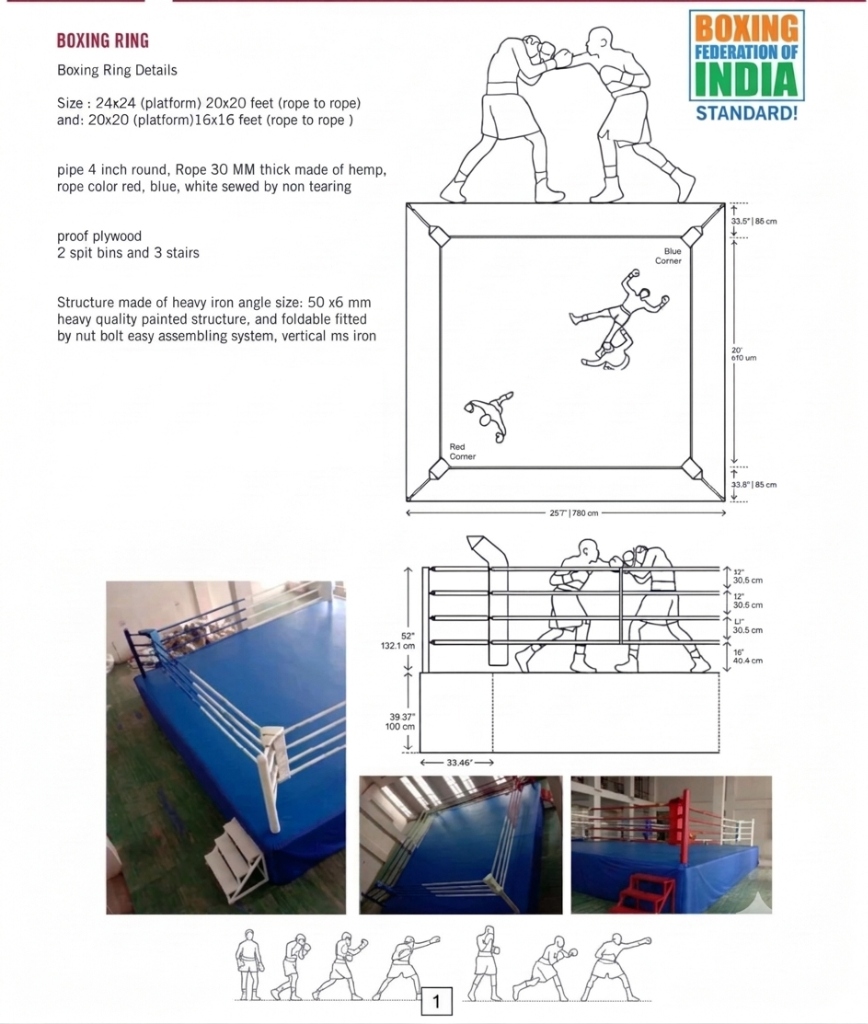
How to Build a Boxing Ring: Regulation Sizes, Engineering, Ropes and India Costs
READ STORY →
Best Boxing Gloves: Complete Buyer's Guide by Weight, Material and Price
READ STORY →